

About Pisciculture
Each country has a responsibility to properly assess declining natural resources, ensure their effective management and regulation, find ways to use them rationally and take care of their restoration. The Fisheries Service under the Ministry of Agriculture of the Republic of Lithuania has been delegated the function of restoring and increasing fish resources in state-owned water bodies. The condition of fish populations in Lithuania’s water bodies is affected not only by natural fish mortality, but also by anthropogenic impact, which is very significant considering the number of recreational and commercial fishers.
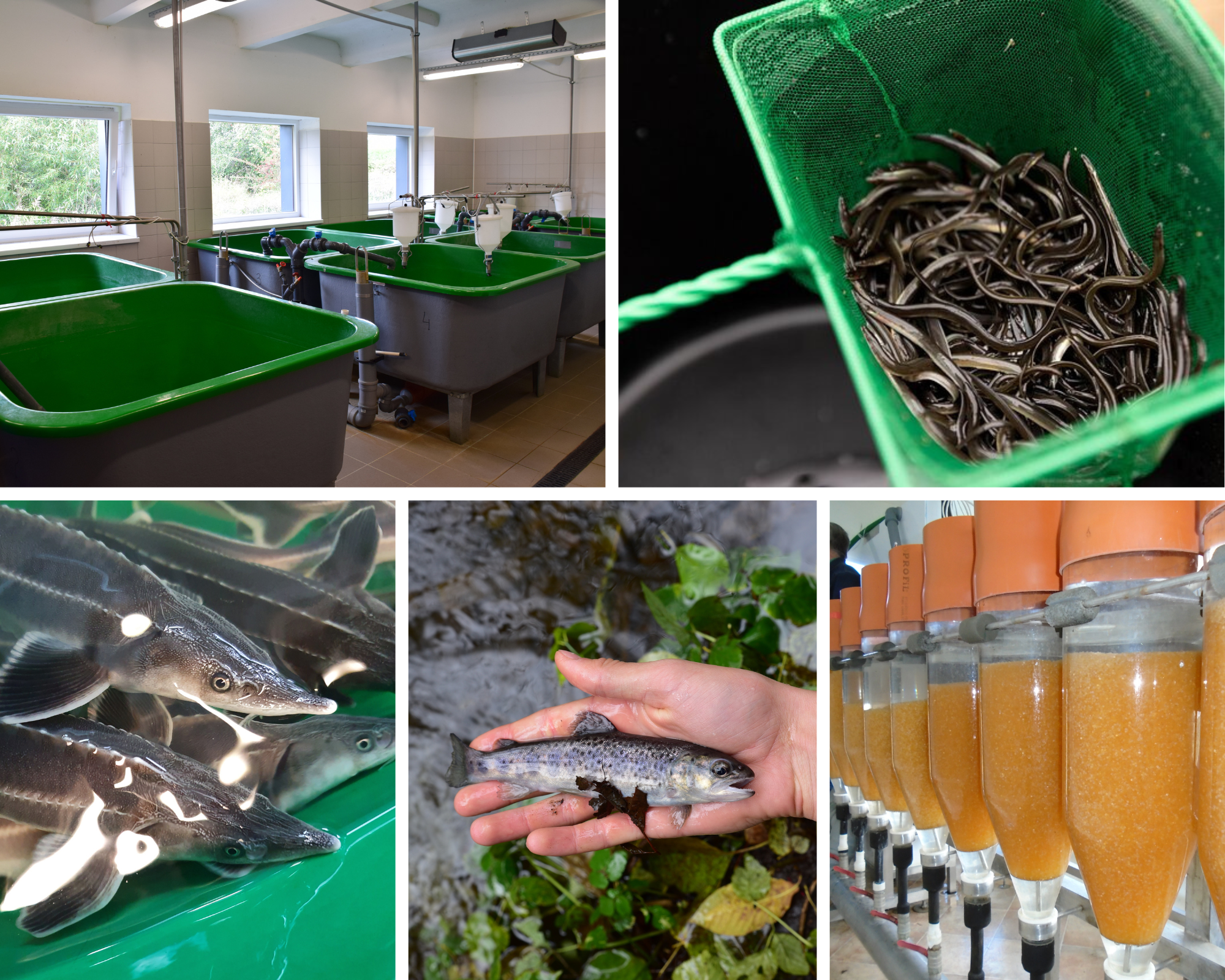
One of the most effective and widely used methods for the rapid and efficient restoration of fish resources is pisciculture, which can be up to ten times more effective than natural spawning. For this purpose, various fish species are continuously bred and reared in five technologically modern Southern, Eastern and Western Divisions of the Pisciculture Department. Taking into account the condition of fish populations in water bodies and scientific recommendations for pisciculture activities, the Fisheries Service annually releases up to 15 million reared fish into Lithuanian state-owned water bodies. These include Atlantic sturgeon, European eel, salmon, sea trout, common carp, pike, tench, bream, pike-perch, burbot and other fish species. The fish reared and stocked by the Fisheries Service account for around 90 percent of all fish stocked into Lithuanian state-owned water bodies.
With the start of fish farming under recirculating aquaculture system conditions, using balanced feed and an optimal temperature regime, artificial fish breeding and rearing gained significant momentum. Today, artificial breeding in Lithuania has become an integral part of the management plans for Atlantic sturgeon, European eel and salmonid fish resources. Over the past four years alone, the divisions of the Pisciculture Department have reared and released 1.5 million summer fry of salmon and sea trout into Lithuanian rivers, as well as more than 6 million European eels into lakes. Activities related to the stocking of Atlantic sturgeon, which once lived in the Baltic Sea, are also being carried out in Lithuanian rivers. Between 2011 and 2024, the Fisheries Service released more than 437 thousand reared Atlantic sturgeon juveniles, hatched from eggs and reared in the production subdivisions of the Fisheries Service, into the Neris and Šventoji rivers. The reintroduction of Atlantic sturgeon is a long-term process that requires diligence, patience and considerable effort. Therefore, these activities require national and international attention, as well as responsible and conscientious public behaviour.
Successful pisciculture activities contribute to the increase not only of protected, rare and endangered fish species, but also of crayfish populations. It is particularly important to preserve native crayfish species, namely the noble crayfish and the narrow-clawed crayfish. Guided by the approved strategy for increasing valuable fish resources and by annual fish and crayfish stocking plans, the Fisheries Service releases broad-clawed crayfish into state-owned inland water bodies. In addition, in accordance with scientific recommendations and annual fish and crayfish capture plans for pisciculture purposes, narrow-clawed crayfish are caught and transferred to designated water bodies. Priority is given to stocking water bodies where these crayfish historically occurred and where there are no natural predators, such as eels, or invasive crayfish.
Last updated: 01-07-2026